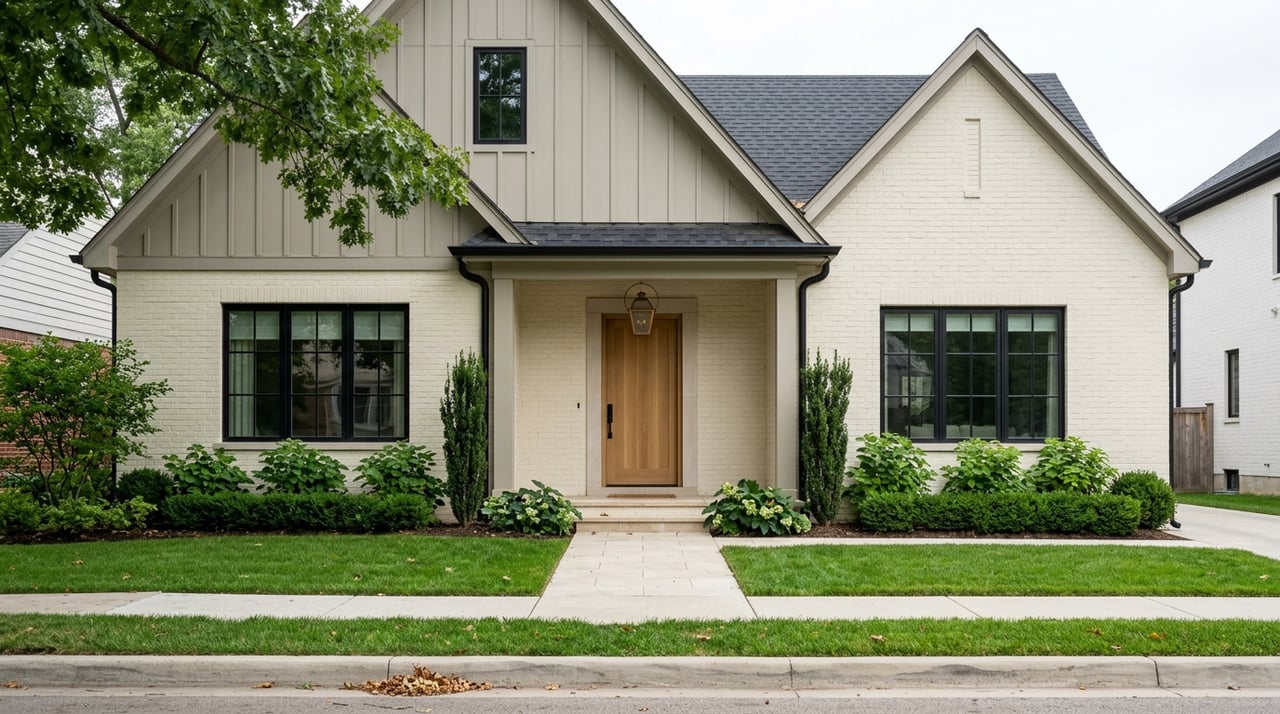
Nashville vs Williamson County Suburbs Home Buying Guide
May 14, 2026
May 14, 2026
Trying to choose between Nashville and the Williamson County suburbs? You are not alone. For many buyers, this decision comes down to a very real tradeoff between location, home style, commute, and budget. If you are weighing city access against suburban space, this guide will help you compare Nashville, Brentwood, Franklin, Nolensville, and Spring Hill with more clarity. Let’s dive in.
At the highest level, the biggest differences are price, ownership mix, and lifestyle feel. Nashville, viewed here as the core Davidson County market, offers a more urban housing mix and a lower entry point than the Williamson County suburbs.
The Nashville-Davidson balance has a 52.4% owner-occupied housing rate and a median owner-occupied home value of $413,600. By comparison, Brentwood, Franklin, Nolensville, and Spring Hill all have higher owner-occupancy rates and higher home values, which points to a more suburban ownership pattern.
March 2026 market snapshots show the gap clearly. Median sale prices were $470,000 in Nashville, $1,610,375 in Brentwood, $826,900 in Franklin, $899,000 in Nolensville, and $544,990 in Spring Hill. Williamson County also has a much higher median household income than Davidson County, at $135,594 versus $77,853.
Nashville is the most urban-feeling option in this comparison. The lower owner-occupancy rate suggests a more mixed housing stock, including a larger renter presence and a wider range of attached housing.
That can be appealing if you want flexibility in property type or prefer a more central daily routine. In March 2026, Nashville recorded 817 sales with a median 98 days on market, reflecting a broad and active market.
For many buyers, Nashville makes sense when the priority is being closer to the center of the city while keeping the purchase price below what many Williamson County suburbs require. You may give up larger lots or a more traditional suburban setting, but you gain access and choice.
Williamson County suburbs generally appeal to buyers looking for a more residential setting and a higher owner-occupied housing base. They also come with a noticeable price premium.
Growth has also been stronger in Williamson County and nearby suburban areas than in Davidson County. Williamson County grew 9.8% from 2020 to 2025, while Davidson County grew 1.9% from 2020 to 2024. Nolensville and Spring Hill grew even faster, which can matter if you are paying attention to new construction, road changes, and evolving development patterns.
Brentwood is the highest-priced option in this group and clearly sits in the luxury tier. The city describes itself as a suburb of Nashville and a premier residential and office community, with 90% residential zoning.
It also highlights rolling hills, greenways, and a strong retail and restaurant scene. On the housing side, Brentwood has a 90.4% owner-occupied rate, a median owner-occupied value of $1,031,300, and a median sale price of $1,610,375.
If you are looking for a polished suburban setting and are comfortable shopping at the top end of the market, Brentwood stands apart. In March 2026, the median days on market was 92.
Franklin blends suburban living with a historic downtown identity. It sits about 17 miles south of Nashville and has strong access via I-65 and State Route 840.
Among these markets, Franklin was the fastest-moving in the March 2026 snapshot. It posted a median sale price of $826,900 and a median 65 days on market.
Franklin also has a 63.8% owner-occupied rate and a median owner-occupied home value of $705,400. If you want suburban housing with a well-known town center and easier regional access, Franklin often lands in a sweet spot between lifestyle and convenience.
Nolensville is described by TDOT as a commuter-oriented bedroom community. Residents often commute to Nashville, Brentwood, Franklin, and Smyrna, which makes its location part of the appeal.
It also stands out for very high owner occupancy. Nolensville has a 93.6% owner-occupied rate, a median owner-occupied value of $777,800, and a median sale price of $899,000.
The town’s estimated 2024 population was 15,809, and the market had a median 81 days on market in March 2026. If you are drawn to a growing suburb with a strong ownership base and commuter focus, Nolensville deserves a close look.
Spring Hill is the most affordable suburban option in this comparison. Its median sale price was $544,990 in March 2026, well below Franklin, Nolensville, and Brentwood.
It has a 73.4% owner-occupied rate and a median owner-occupied value of $493,800. Official community materials place Spring Hill between Williamson and Maury counties and describe it as about 30 minutes from Nashville.
That lower price point can make Spring Hill appealing if you want a suburban setting without stretching as far as other Williamson County markets. The tradeoff is that it tends to be more commute-dependent, especially if your routine centers on downtown Nashville.
One of the clearest ways to choose is to picture your normal week, not just your dream house. Where do you need to be most often, and how much driving are you willing to absorb?
Nashville core is the best fit if you want a more urban daily rhythm. The housing mix is broader, and the market structure points to more flexibility in home type and less emphasis on large-lot living.
Brentwood and Franklin are the most established suburban-lifestyle choices in this group. Brentwood leans toward a polished residential feel, while Franklin adds a historic downtown environment and strong highway access.
Nolensville is more commuter-oriented by design. Spring Hill can work well for buyers who prioritize price and space, but it often comes with a more address-dependent commute equation.
Price is only part of affordability. Property taxes can materially affect your long-term cost of ownership, especially when you are comparing Davidson County with Williamson County addresses.
Davidson County’s Metro tax rate is currently shown at $2.782 to $2.814 per $100 of assessed value. In Tennessee, residential property is assessed at 25% of appraised value.
Williamson County’s 2025 tax calculator lists combined local rates of $1.49 in Brentwood, $1.566 or $2.0633 in Franklin depending on boundary, $1.64 in Nolensville, and $2.009 in Spring Hill on the Williamson County side. Brentwood’s city rate remains $0.29, and Franklin’s 2025 city rate is shown at .3261 per $100 assessed value.
This is why two homes with similar list prices can carry different ownership costs. Before you decide where to buy, it is smart to compare the full monthly picture, not just the mortgage payment.
In the suburbs, the exact address can matter more than many buyers expect. Tax treatment, school assignment, and even local administration can shift from one property to the next.
Franklin is a good example. Tax treatment can change depending on whether a home is inside the Franklin Special School District boundary.
Spring Hill also requires close review because it is split between Williamson and Maury counties, and city taxes are collected separately. Williamson County’s trustee collects taxes for Brentwood, Franklin, and Nolensville, while Spring Hill handles its own city tax collection.
This means your search should go beyond city names. A home’s specific location can influence taxes, district assignment, and the broader ownership experience.
If schools are part of your planning process, it helps to know how the systems are organized. Metro Nashville Public Schools serves Davidson County, while Williamson County Schools serves Williamson County and reported 41,374 students in 2025-26.
For relocation buyers, this is another reason to verify details at the property level. The exact street address can affect school district, tax structure, and sometimes the surrounding development context.
Growth trends also tell you something about what a place may feel like over time. Williamson County grew 9.8% from 2020 to 2025, Nolensville grew 14.3% from 2020 to 2024, and Spring Hill grew 17.2% from 2020 to 2024.
In practical terms, faster growth often means more new construction and more infrastructure change than you may see in the Nashville core. If you like newer neighborhoods and evolving suburban areas, that may be a positive. If you prefer a more established pattern, that may push you toward a different part of the market.
If you are still torn, focus on the tradeoffs that matter most to your day-to-day life. Usually, the right answer becomes clearer when you rank budget, commute, home style, and long-term ownership costs.
Here is a simple framework:
The best place to buy is the one that fits your real lifestyle, not just your wish list. If you want help comparing specific neighborhoods, new construction options, or resale opportunities across Nashville and Williamson County, connect with Stephanie Sexton for a personalized consultation.
Stay up to date on the latest real estate trends.
Renowned for her client-focused approach and steadfast commitment, Stephanie distinguishes herself as a top negotiator, always striving for mutually beneficial outcomes for all parties involved. Her expertise is particularly valuable in navigating the complexities from contract to close, ensuring her clients achieve their real estate objectives efficiently and effectively while getting the best value.